
Introduction
La dysfonction du plancher pelvien est un problème chronique fréquent après l'accouchement, pouvant entraîner des troubles tels que l'incontinence urinaire, le prolapsus des organes pelviens et des dysfonctions sexuelles. L'accouchement par voie basse peut causer davantage de lésions du plancher pelvien que la césarienne : des études montrent que les femmes ayant accouché par voie basse présentent un taux plus élevé de troubles du plancher pelvien que celles ayant subi une césarienne. Une rééducation précoce est donc cruciale, en particulier pour les femmes ayant accouché par voie basse. Les interventions de kinésithérapie du plancher pelvien, incluant les exercices de Kegel (les exercices classiques du plancher pelvien chez la femme) et le biofeedback, sont essentielles pour restaurer la force musculaire et prévenir les problèmes à long terme. En effet, la recherche indique que les programmes d'exercices du plancher pelvien supervisés peuvent réduire significativement l'incontinence et le risque de prolapsus post-partum. Bien que ce blog soit principalement destiné aux femmes en post-partum, il est important de noter que les exercices du plancher pelvien pour hommes sont également bénéfiques pour des problèmes comme l'incontinence et ne doivent pas être négligés. Nous discutons ici d'une étude qui a utilisé l'électromyographie de surface (EMG) (protocole Glazer) pour adapter les programmes de rééducation du plancher pelvien aux nouvelles mères, et comment cela a amélioré les résultats pour différentes méthodes d'accouchement.
Aperçu de l'étude (Objectif et méthodologie)
L'étude clinique de Qiu et al. visait à évaluer l'intérêt clinique de l'électromyographie de surface (EMG) de Glazer pour guider la rééducation périnéale post-partum selon le mode d'accouchement (voie basse, césarienne et épisiotomie). Au total, 180 femmes, 42 jours après l'accouchement, ont été incluses et réparties en deux groupes : un groupe d'observation (90 femmes ayant bénéficié d'une rééducation périnéale guidée par EMG) et un groupe témoin (90 femmes ayant suivi une rééducation périnéale standard sans guidage EMG). Au sein du groupe d'observation, les patientes ont été subdivisées selon le mode d'accouchement (30 femmes par sous-groupe : césarienne, accouchement par voie basse spontané, accouchement par voie basse avec épisiotomie). Toutes les participantes ont suivi un programme de rééducation de 8 à 10 semaines. La thérapie du groupe d'observation était personnalisée grâce au biofeedback EMG de surface ; plus précisément, le système de biofeedback EMG du plancher pelvien était utilisé pour évaluer la fonction musculaire et adapter l'intensité de l'entraînement. Le groupe témoin a suivi un programme d'entraînement des muscles du plancher pelvien (contractions de type Kegel, utilisation de poids vaginaux et stimulation électrique) sans retour d'information ajusté par électromyographie (EMG). Les principaux critères d'évaluation comprenaient le taux de tension anormale des muscles du plancher pelvien et l'incidence des symptômes de dysfonctionnement du plancher pelvien (tels que l'incontinence urinaire et le prolapsus) à 42 jours et à 10 semaines après l'accouchement.
Principales conclusions (Résultats et statistiques)
Six semaines après l'accouchement (42 jours), aucune différence significative n'a été observée entre les groupes concernant les anomalies de tension des muscles pelviens : des pourcentages similaires de femmes présentaient une faible force musculaire initiale dans les deux groupes (rééducation guidée par EMG et rééducation standard). Cependant, dix semaines après l'accouchement, le groupe de rééducation guidée par EMG affichait un taux d'anomalies de tension des muscles pelviens nettement inférieur à celui du groupe témoin (amélioration significative, p < 0,05). Notamment, au sein de ce groupe, les femmes ayant accouché par césarienne ont présenté une meilleure récupération du tonus musculaire pelvien que celles ayant accouché par voie basse (avec ou sans épisiotomie) : à dix semaines, le sous-groupe césarienne présentait significativement moins de cas de faiblesse musculaire ou de troubles du plancher pelvien que le sous-groupe accouchement par voie basse spontanée. Globalement, l'incidence des dysfonctionnements du plancher pelvien à dix semaines était plus élevée dans le groupe témoin (rééducation standard) que dans le groupe de biofeedback EMG, ce qui indique que l'entraînement personnalisé par EMG a permis d'obtenir de meilleurs résultats fonctionnels. Dans le groupe EMG, seule une faible proportion de femmes présentait encore des symptômes de troubles du plancher pelvien 10 semaines après l'accouchement, tandis que dans le groupe témoin, davantage de femmes ont rapporté des problèmes tels que des fuites urinaires ou des symptômes de prolapsus (différence statistiquement significative, p < 0,05). Il est important de noter que, même parmi les patientes ayant bénéficié d'un suivi EMG, celles ayant accouché par voie basse (en particulier sans assistance) présentaient un taux plus élevé de dysfonctionnement résiduel du plancher pelvien que celles ayant accouché par césarienne. Ceci confirme l'idée généralement admise que l'accouchement par voie basse exerce une pression plus importante sur les tissus pelviens, soulignant ainsi la nécessité d'une rééducation ciblée pour ces femmes. La conclusion de l'étude est sans équivoque : l'utilisation du biofeedback EMG de surface pour guider et évaluer la rééducation du plancher pelvien après l'accouchement présente des avantages significatifs. Elle améliore la récupération de la force musculaire pelvienne et réduit la fréquence des dysfonctionnements du plancher pelvien par rapport aux exercices conventionnels. Les auteurs recommandent tout particulièrement d'accorder une attention particulière aux femmes ayant accouché par voie basse, car elles peuvent nécessiter une rééducation plus intensive pour atteindre le même niveau de récupération que celles ayant accouché par césarienne.
Implications cliniques et pertinence
Pour les cliniciens et les professionnels de la santé pelvienne, ces résultats soulignent l'intérêt d'intégrer la technologie du biofeedback à la rééducation post-partum précoce. Un programme guidé par électromyographie (EMG) fournit un retour d'information en temps réel sur l'activation et l'endurance musculaires, permettant aux thérapeutes de personnaliser les exercices de Kegel en fonction du niveau de force actuel de chaque patiente. Concrètement, cela pourrait se traduire par un ajustement de la difficulté des exercices du plancher pelvien pour les femmes, basé sur des mesures EMG objectives – en d'autres termes, l'utilisation de données pour optimiser les séances de Kegel pour chaque patiente. Il en résulte un renforcement plus efficace du plancher pelvien, particulièrement important pour les femmes dont les muscles sont affaiblis après un accouchement vaginal éprouvant. L'étude confirme également que le mode d'accouchement influence les besoins en rééducation. Les femmes ayant accouché par voie basse (en particulier en cas de traumatisme périnéal ou d'accouchement vaginal instrumental) présentent un risque plus élevé de dysfonctionnement du plancher pelvien et bénéficient donc grandement d'une thérapie avancée assistée par biofeedback. En revanche, les mères ayant accouché par césarienne dans cette étude présentaient moins de problèmes à 10 semaines, bien que leur état se soit également amélioré grâce à l'entraînement. Cela suggère que les cliniciens devraient adopter une approche personnalisée : pour les patientes à haut risque (par exemple, les primipares plus âgées ou celles ayant connu un accouchement vaginal difficile), intégrer le biofeedback EMG et éventuellement intensifier le programme de rééducation. L’objectif n’est pas seulement de traiter les symptômes existants, mais aussi de prévenir les complications à long terme telles que l’incontinence d’effort ou le prolapsus. Il est à noter que le guidage EMG a permis d’identifier des déficits subtils de la fonction musculaire et de suivre les progrès. Ces mesures objectives peuvent également motiver les patientes en leur montrant les améliorations de l’activité musculaire au fil du temps, ce qui peut potentiellement améliorer leur adhésion au programme d’exercices du plancher pelvien. En résumé, l’étude confirme que la combinaison de la kinésithérapie périnéale traditionnelle et des technologies modernes de biofeedback conduit à de meilleurs résultats – un atout que les spécialistes de la santé pelvienne peuvent exploiter dans les soins post-partum.
Application et intégration avec les appareils DioLaz
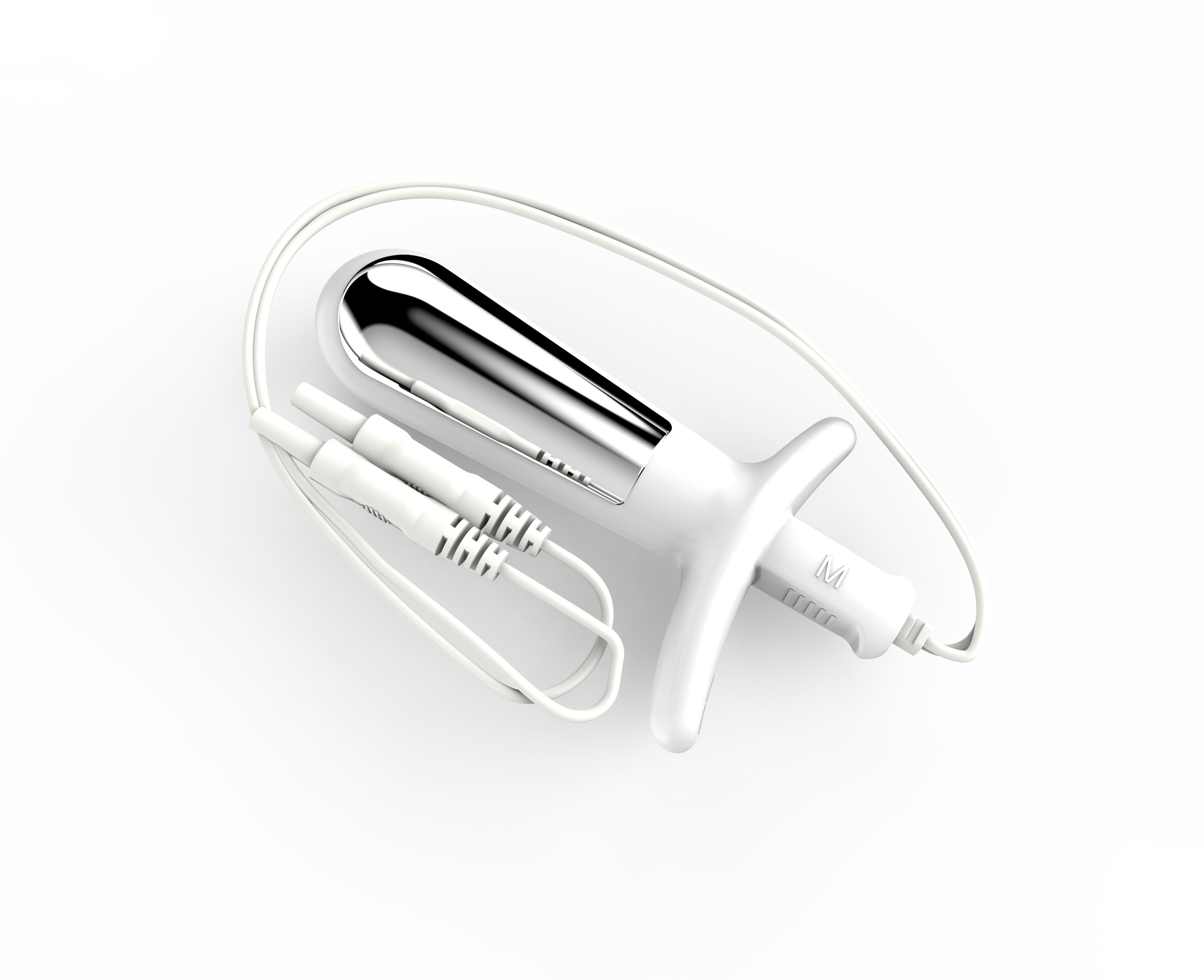
Cette recherche soutient directement l'utilisation d'appareils comme le système de biofeedback et de stimulation du plancher pelvien DioLaz en pratique clinique. En effet, l'équipement utilisé dans l'étude – le système de biofeedback EMG de surface – est représentatif de la technologie de pointe désormais accessible aux thérapeutes. Les systèmes de rééducation périnéale DioLaz offrent précisément ce type de surveillance EMG et d'entraînement par biofeedback. Grâce à des capteurs EMG vaginaux, le système peut quantifier les contractions des muscles du plancher pelvien d'une patiente (force, endurance et coordination) et afficher ces informations en temps réel. Les cliniciens peuvent ensuite guider les patientes dans leurs exercices de Kegel avec un retour d'information visuel et auditif, en s'assurant que les muscles appropriés sont sollicités – à l'instar du protocole Glazer utilisé dans l'étude. Ainsi, l'intégration d'un appareil DioLaz dans votre programme de rééducation post-partum peut contribuer à reproduire les améliorations observées lors de l'essai. Par exemple, un thérapeute pourrait réaliser une évaluation EMG initiale lors du contrôle post-partum à 6 semaines (similaire à l'évaluation à 42 jours de l'étude) afin d'identifier d'éventuels déficits. L'appareil mettra en évidence une éventuelle endurance musculaire insuffisante ou une faible force de contraction maximale chez une jeune maman. À partir de ces résultats, le thérapeute établira un programme d'entraînement personnalisé : par exemple, des séances de biofeedback trois fois par semaine où la maman s'entraîne à contracter son périnée pour atteindre les objectifs affichés à l'écran, en complément d'exercices classiques du périnée à domicile. Au cours des 8 à 10 semaines suivantes, le système DioLaz suivra l'évolution de la pression musculaire et de l'amplitude EMG, en ajustant automatiquement la difficulté (par exemple, en augmentant la durée de contraction cible à mesure que la force s'améliore). Ceci garantit un entraînement progressif, comparable à l'augmentation des charges en musculation, mais ici, l'effort neuromusculaire du périnée est accru. Ces systèmes de biofeedback et de stimulation renforcent non seulement les muscles, mais améliorent également le contrôle et la coordination moteurs, essentiels pour des fonctions comme la continence. De plus, des appareils comme le DioLaz peuvent stocker des données et générer des rapports, permettant aux cliniciens de documenter objectivement les progrès (par exemple : « amélioration de la pression vaginale au repos, augmentation de 30 % de l'amplitude EMG lors de la contraction maximale »). Ces indicateurs trouvent un écho favorable auprès des professionnels de santé et des patients : ils valident l’efficacité du traitement et peuvent justifier la poursuite de la thérapie ou sa prise en charge par l’assurance maladie. De plus, disposer d’un système de biofeedback et de stimulation dans votre clinique peut attirer des clients en quête des thérapies les plus récentes et validées scientifiquement pour la récupération post-partum. Dans un contexte de consommateurs avertis, de nombreux praticiens estiment que proposer une rééducation périnéale de pointe (comme les exercices de Pilates périnéal guidés par EMG ou la thérapie par stimulation) constitue un atout majeur. En vous appuyant sur des études comme celle-ci, vous pouvez expliquer avec assurance à vos patients que l’approche intégrée – exercices et dispositif – a prouvé son efficacité pour accélérer la récupération et prévenir les problèmes tels que l’incontinence.
Conclusion
En résumé, la rééducation périnéale guidée par électromyographie de surface (EMG) améliore significativement la récupération post-partum. L'étude analysée a démontré une récupération plus rapide de la force des muscles du plancher pelvien et une réduction des troubles du plancher pelvien lorsque le biofeedback EMG était utilisé en complément des exercices de Kegel classiques. Pour les professionnels de la santé périnéale, il s'agit d'un argument convaincant pour moderniser les protocoles de thérapie post-partum. L'utilisation d'appareils de biofeedback avancés permet aux nouvelles mères, notamment celles ayant accouché par voie basse, de retrouver une fonction pelvienne plus complète et plus rapide. Ceci favorise une meilleure continence à long terme, un meilleur soutien des organes pelviens et une meilleure santé sexuelle, améliorant ainsi la qualité de vie. Si vous êtes clinicien ou propriétaire de clinique, envisagez d'intégrer le système de biofeedback et de stimulation du plancher pelvien DioLaz à votre pratique. Vous alignerez ainsi vos services sur les dernières recherches et offrirez à vos patientes les meilleurs outils pour réussir leur rééducation. Le système DioLaz propose le même type de biofeedback EMG que celui utilisé dans cette étude, ainsi que des options de stimulation électrique douce pour accélérer le renforcement musculaire. Agissez dès aujourd'hui en explorant notre page produit dédiée au système de biofeedback et de stimulation pelvienne DioLaz (technologie sur laquelle repose cette étude) : découvrez comment il peut enrichir vos programmes de rééducation périnéale et accompagner vos patientes dans leur rétablissement. Offrez à vos clientes des perspectives concrètes et aidez-les à retrouver confiance en leur corps après l'accouchement. Ensemble, mettons en œuvre des solutions fondées sur des données probantes pour une rééducation périnéale post-partum plus efficace que jamais.
Références :
Baud, D., Sichitiu, J., Lombardi, V., De Rham, M., Meyer, S. et Achtari, C. (2020). Comparaison des dysfonctions du plancher pelvien 6 ans après un accouchement par voie basse sans complications versus une césarienne programmée : une étude transversale. Scientific Reports, 10(1), 21509. https://doi.org/10.1038/s41598-020-78625-3
Qiu, L. (2020). Guider et évaluer la rééducation du plancher pelvien post-partum avec l'EMG de surface Glazer pour différents modes d'accouchement. Journal of Clinical Medicine in Practice, 41(9), 22–24.
Partager:
Guérir la diastasis recti : Technologie du plancher pelvien pour la restauration du tronc
Les soins post-partum associés à l'utilisation d'un dispositif de renforcement du plancher pelvien préviennent les dysfonctionnements pelviens