

Introduction
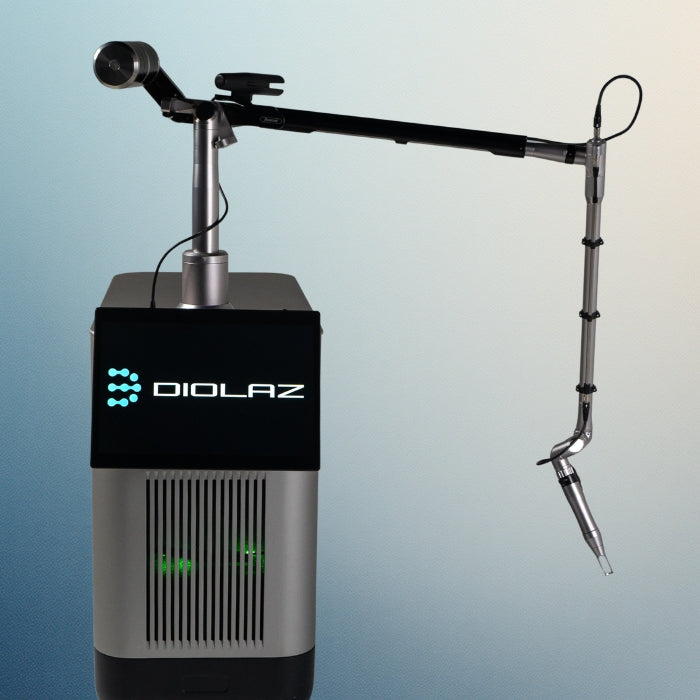
Many aesthetic practitioners encounter confusion between diode laser and Intense Pulsed Light (IPL) technologies for hair removal. Although both are light-based treatments, their technical distinctions significantly impact efficacy and safety. This article provides a clinical comparison of diode laser versus IPL, emphasizing that the DioLaz Diode Laser Hair Removal Machine is purpose-built for hair removal and delivers superior results and safety over IPL for permanent hair reduction. We also discuss why facial rejuvenation requires different laser systems altogether, such as Fractional CO2 or Picosecond lasers, rather than repurposing a hair removal device.
Wavelength and Pulse Delivery Differences
Diode Laser Technology: Diode lasers for hair removal emit a single, specific wavelength of light (808 nm). This monochromatic beam is coherent and can be delivered in controlled pulses of a defined duration. For example, the DioLaz diode system uses an 808 nm-centered output (often combined with 755 nm and 1064 nm in modern platforms) to maximize absorption by hair follicle melanin while minimizing absorption by other chromophores. Pulse durations in the millisecond range are chosen to match the thermal relaxation time of hair follicles, confining heat to the target. The laser’s beam is collimated and can penetrate deep into the dermis, reaching the hair bulb with high fluence density. This selective, high-energy delivery leads to concentrated thermal injury in hair follicles with limited scatter to surrounding skin. Effective epidermal cooling (contact sapphire or cryogen spray) is usually integrated into diode handpieces, protecting the skin and further enhancing safety during the laser pulse.
IPL Technology: IPL is not a laser, but a broad-spectrum light source (typically emitting 500–1200 nm) filtered from a flashlamp. In an IPL pulse, multiple wavelengths disperse into the skin simultaneously. Cut-off filters are used to block the shortest wavelengths (e.g. <560 nm) to reduce superficial absorption, but the output remains polychromatic and non-coherent. A single IPL pulse often consists of a train of sub-pulses with brief delays, rather than one crisp pulse, to allow some skin cooling. Despite these measures, IPL’s energy is distributed across a spectrum: only a fraction of the wavelengths are optimally absorbed by hair melanin, while others may be absorbed by hemoglobin or water or lost to scattering. This lack of selectivity means IPL cannot achieve the same focused energy density in the follicle as a Diode laser. IPL penetration is also less deep on average – shorter wavelengths in the band get absorbed in superficial tissue, so IPL may not reach the deepest hair bulbs effectively. In practice, IPL fluence per wavelength is lower than a laser’s, since the device must stay within safe limits for all skin exposure. The result is a less intense, more diffuse heating of the follicle.
Selectivity for Melanin: Diode lasers adhere closely to the principle of selective photothermolysis. By using a wavelength near the absorption peak of melanin (approximately 700–800 nm) while avoiding peaks for other chromophores, the diode laser predominantly targets the pigment in hair shafts and follicles. The light is absorbed by follicular melanin and converted to heat, destroying the hair with minimal effect on surrounding tissue. In contrast, IPL emits a broader range that includes wavelengths absorbed by epidermal melanin and blood vessels as well. Even with filters, IPL is comparatively non-specific – it may heat both the hair and portions of the surrounding skin. This is especially problematic in darker skin tones or tanned skin, where abundant epidermal melanin competes for absorption. Diode lasers, being single-wavelength, can be better tuned to avoid unnecessary chromophore absorption (for instance, a longer 810 nm wavelength is less absorbed by epidermal melanin than the shorter wavelengths present in IPL). This selectivity allows higher fluences to be safely delivered to the hair root, improving efficacy.
Penetration Depth: The wavelength also determines how deep the light travels. Longer wavelengths (such as Diode 808 nm and Nd:YAG 1064 nm) penetrate deeper into the dermis than shorter visible light. Diode laser light can reach the mid-dermis where the hair bulb and bulge reside, even for coarse, deep-seated hairs. IPL’s spectrum includes many shorter wavelengths (600–700 nm) that are absorbed or scattered in the upper dermis, so less energy reaches deep follicles. Even though IPL can target melanin, its depth of action is more limited – better for shallow hair follicles but less effective for deep hair in areas like bikini or backs. In summary, the diode’s focused, deep-penetrating beam gives it an advantage in treating thicker, deeper hairs, whereas IPL might miss these targets or require more sessions.
Efficacy and Safety in Permanent Hair Reduction
Diode lasers are considered the gold standard for permanent hair reduction due to their superior efficacy per treatment and ability to treat a wide range of patients safely. Clinical studies directly comparing diode lasers to IPL consistently demonstrate better hair clearance with diode systems:
-
Higher Hair Reduction: In a randomized trial of axillary hair removal, a 808 nm diode laser achieved a significantly greater reduction in hair counts compared to IPL after 6 sessions (each subject received diode on one axilla, IPL on the other). Both technologies produced lasting results at 6-month follow-up, but the diode led to more pronounced hair loss. Another split-face study in women with facial hirsutism found similar efficacy between IPL and diode only after multiple treatments, with diode tending toward higher clearance percentages in many patients. Importantly, diode lasers often reach the threshold for permanent follicle destruction more readily. A 2022 systematic review of long-term outcomes found diode lasers yielded up to ~69% average hair reduction, whereas IPL produced at best ~50% reduction in comparable conditions. In other words, IPL can reduce hair, but a well-calibrated diode laser typically eliminates a larger fraction of hairs and delays regrowth more effectively.
-
Fewer Sessions: Because each diode laser session imparts higher concentrated energy to the follicle, patients frequently require fewer treatment sessions to achieve significant clearance. IPL, delivering a gentler diffuse energy, may need additional sessions to catch up. In practice, clinics report that diode lasers can often produce optimal results in ~6 sessions, whereas IPL might require 8 or more sessions for a similar outcome (and even then, total clearance is usually lower). Diode lasers also tend to be more effective on fine hairs than IPL, which struggles once hair becomes very thin or light – diode’s 808 nm beam, especially when combined with shorter 755 nm, can pick up moderately pigmented fine hair that broad-spectrum IPL might not reliably heat.
-
Diverse Skin Types: A major advantage of diode lasers is their proven safety and efficacy across a broad range of Fitzpatrick skin types. The 808 nm wavelength strikes a balance between melanin absorption and depth, making it suitable for lighter skin (Type I-III) as well as darker tones when used with appropriate settings. Published studies confirm that modern diode lasers can safely treat patients of color – including Type V and even VI – with minimal complications, provided aggressive epidermal cooling and conservative parameters are employed. For example, a 2019 study on an 808 nm Diode laser in a mixed-ethnicity patient group (Types III-V) showed effective hair removal in all subjects without any lasting pigmentary changes or burns; only transient erythema and irritation were observed, which resolved quickly. The diode’s precision allows it to target follicular melanin in darker skin without excessively heating the epidermis, especially with longer pulse durations and lower fluences adjusted for high melanin levels. IPL, on the other hand, has a higher risk profile in dark skin. While some IPL devices are cleared for use on darker skin with special filters, the broad-spectrum light still carries a significant risk of burns, blistering, or post-inflammatory hyperpigmentation if not carefully limited. In fact, IPL on Fitzpatrick V–VI is generally approached with extreme caution or avoided, because the uncontrolled shorter wavelengths can cause overheating of the epidermis. Diode lasers and Nd:YAG lasers are preferred for these patients due to their inherently safer wavelength profiles.
-
Safety Profile: When it comes to adverse effects, both diode and IPL can cause temporary effects like redness, perifollicular edema (swelling around hairs), and mild sunburn-like discomfort, which are expected results of follicular heating. However, serious complications (burns, scarring, pigment changes) are rarer with diode lasers in experienced hands. The diode’s integrated cooling and precise targeting contribute to less collateral skin damage. In the axillary study mentioned above, neither diode nor IPL caused any permanent adverse effects, but patients did report that diode laser treatment was slightly more painful than IPL. This higher discomfort is attributed to diode’s higher energy delivery; it is typically managed with cooling and, if needed, topical anesthetic. IPL’s lower peak power can be less painful but that also ties to lower efficacy. Overall, with proper parameters, diode lasers provide a safe treatment course. Case series have documented only transient side effects (mild irritation, short-term hyperpigmentation) and no scarring when using diode lasers on diverse populations. IPL carries a higher chance of user error leading to burns – for instance, an unfiltered pulse on a tanned area can quickly cause epidermal injury. Moreover, because IPL spot sizes are large and not as collimated, uneven contact or skin curvature can result in hotspots or missed spots. The consensus in dermatology is that a diode laser offers a more predictable and safer profile for long-term hair removal, especially as skin type increases.
Limitations of IPL in Hair Removal and Skin Rejuvenation
IPL devices have remained popular in medispas due to their versatility and lower cost, but there are important limitations to understand:
-
Hair Removal Efficacy: As discussed, IPL is generally less potent for epilation. Its broad spectrum means energy is wasted outside the optimal range for hair. Clinical outcomes with IPL for hair removal tend to be less robust – often labeled as “hair reduction” rather than near-permanent removal. Patients treated with IPL might see hair regrowth sooner and require more frequent maintenance sessions. Some hairs, especially light brown or finer hairs, may not respond to IPL at all because the emitted light isn’t sufficiently absorbed. In contrast, medical-grade lasers (diode, alexandrite, Nd:YAG) can often destroy these follicles if the hair contains any melanin, owing to higher fluence and better absorption. Another phenomenon observed with IPL is paradoxical hypertrichosis, where instead of eliminating hair, the treatment stimulates vellus (fine) hair to convert to thicker hair in adjacent untreated areas. This paradoxical effect has been reported more with IPL and certain laser wavelengths (like alexandrite) in areas like the face or neck. It likely results from subtherapeutic heating of follicles, something more likely when using a lower-intensity device. Diode lasers, by achieving a more complete thermal destruction, reduce the chance of such unwanted stimulation.
-
Lack of Selectivity and Precision: IPL’s non-selective nature is a double-edged sword. On one hand, it can address multiple targets (pigment, vessels, hair) to a mild degree, which is why IPL is marketed for “photorejuvenation” of sun-damaged skin. On the other hand, treating multiple chromophores at once means compromises in efficacy and higher risk of collateral damage. For hair removal, IPL cannot match the precision of a single-wavelength laser focused purely on melanin. This means areas with dense melanin (e.g., moles, dark skin, or even a deep tan) will disproportionately absorb IPL energy, forcing practitioners to lower settings and thus reduce efficacy. Lasers can be calibrated to a safer wavelength or have smaller spot sizes to maneuver around these challenges – something IPL lacks. The large handpieces of IPL and broad beams can also make it difficult to treat small or contoured areas (like upper lip or bikini line) with the same uniformity a laser provides.
-
Higher Risk of Adverse Effects: Owing to its wide range of light, IPL can incite side effects that a targeted laser would avoid. Epidermal burns are the primary concern – even in light-skinned patients, improper settings or inadequate cooling can cause blistering. The operator must adjust energy based on skin type and use gel cooling, but the variability of IPL output makes it less foolproof than laser systems with built-in safeguards (e.g., skin contact sensors, cooling tips). Post-inflammatory hyperpigmentation (PIH) is another risk, particularly in darker skin phototypes or if an IPL burn occurs. A report on IPL in Asian patients noted that hyperpigmentation and even hypopigmentation can follow treatment, typically as a result of overheating the epidermis. By contrast, diode lasers used with cooling are shown to have low incidences of PIH, even in Type IV-V skin. Another limitation is eye safety – IPL emits in many wavelengths including those that can be more hazardous to eyes if protection is insufficient. Medical lasers are typically used with wavelength-specific eyewear and aiming beams, adding a layer of safety.
-
Suboptimal Skin Rejuvenation Results: IPL is sometimes touted for skin rejuvenation (so-called “photofacials”) because it can improve superficial pigment and redness. Indeed, IPL can scatter light into the upper dermis to coagulate small blood vessels (helping rosacea or telangiectasias) and break up epidermal pigment (fading sunspots or freckles). However, IPL is fundamentally limited in addressing deeper signs of aging such as wrinkles, significant loss of elasticity, or acne scarring. These concerns require collagen remodeling at a deeper level or precise ablation of damaged skin – something IPL cannot accomplish. Comparative studies highlight this gap: for example, in a trial treating periorbital wrinkles, a series of IPL sessions yielded only mild improvements, whereas a Fractional CO2 laser (a true resurfacing laser) produced far more significant wrinkle reduction as measured by 3D skin imaging. Both treatments were safe, but the laser’s mechanism (ablation and coagulation of dermal collagen) achieved a level of rejuvenation that broad-band light could not. In general, improvements from IPL rejuvenation are limited to pigment homogenization and slight redness reduction after multiple sessions. There is minimal impact on skin texture or laxity. Thus, IPL is not a substitute for modalities like fractional lasers or deep peels when it comes to real dermal remodeling. Providers who attempt to use IPL for heavy photoaging or scarring will likely find the results disappointing and short-lived.
In summary, IPL is a versatile light device but one that makes trade-offs: it does many things, but none of them as powerfully as a dedicated laser. For long-term hair removal, it cannot match the efficacy of diode lasers, and for skin resurfacing, it cannot replace true resurfacing lasers. Its best use is in treating mild, surface-level skin issues in lighter-skinned patients, with the understanding that it’s a gentle, gradual approach. Demanding goals like permanent hair reduction or advanced wrinkle/scar treatment lie outside the IPL’s optimal capabilities, and using IPL in those scenarios can increase the risk of complications without the benefit of adequate results.
Why Facial Rejuvenation Needs Specialized Systems (Not Diode Hair Lasers)
It may be tempting for a clinic to repurpose a powerful diode hair removal laser for other applications like facial rejuvenation or pigmentation, but this is ill-advised. Different aesthetic goals require different wavelengths, pulse characteristics, and tissue interactions. A tool optimized for one target will not safely or effectively treat another. Below are key reasons why facial rejuvenation should be performed with dedicated devices rather than a diode hair removal machine:
-
Chromophore Targeting: Diode hair removal lasers target melanin in hair follicles. They operate at wavelengths (808 nm) that are ideal for pigment absorption in hair, but not ideal for other skin components. For true facial rejuvenation, the main chromophore often is water (for resurfacing lasers) or various pigments in lesions (for treating sunspots or tattoos). For example, an ablative Fractional CO2 laser emits 10,600 nm light, which is strongly absorbed by water in the skin. This causes precise vaporization of microscopic columns of epidermis and dermis, triggering a wound-healing response that lays down new collagen. The outcome is smoother, tighter skin and reduced wrinkles and scars – an effect simply unattainable by an 808 nm hair removal laser, which cannot ablate tissue at all. Similarly, for treating benign pigmented lesions or tattoos, Q-switched or picosecond lasers at 532 nm or 1064 nm are used. These deliver ultrashort pulses (in the nanosecond to picosecond range) that generate a photoacoustic shockwave to break apart pigment particles. A hair removal diode laser lacks the pulse speed to produce such an effect – its pulses are million-times longer (milliseconds), resulting only in thermal heating. Using a long-pulse diode on lentigines or melasma would likely just overheat the skin and risk burns or hyperpigmentation, without effectively shattering the pigment. In short, the wavelength and pulse of each laser system are chosen for a specific chromophore and depth. Hair lasers for melanin in follicles; resurfacing lasers for water in skin; vascular lasers for oxyhemoglobin in vessels; picosecond lasers for inks and pigment, etc. No single device can optimally treat all targets.
-
Pulse Energy and Structure: Rejuvenation procedures often require delivering energy in a very different manner than hair removal. Hair removal seeks bulk heating of follicles to ~70°C to denature them. Rejuvenation might seek either coagulation of dermal collagen (as in non-ablative tightening) or vaporization of tissue (as in ablative resurfacing) or photoacoustic disruption (as in pigment removal). These require vastly different pulse energies and durations. For instance, a Fractional CO2 laser pulse ablates tissue in microseconds, removing columns of skin about 100 microns wide and deep. A picosecond laser’s pulse is so brief (10^(-12) s) that it doesn’t significantly heat tissue but rather produces an intense mechanical stress that fractures pigment and creates tiny intra-dermal vacuoles (laser-induced optical breakdown), which in turn stimulate collagen production. A diode laser cannot be “retooled” to emit microsecond or picosecond pulses – its design and gain medium physically determine a longer pulse. Nor can it be easily outfitted with a fractionation scanner to create micro-beams. By contrast, devices like the DioLaz Fractional CO2 Laser are built with scanning fractional optics to drill an array of microscopic beams into the skin in a controlled pattern. This yields a therapeutic injury pattern appropriate for resurfacing, with intervening healthy tissue for faster healing. A Hair Removal Diode simply puts out a broad beam intended to cover an area and heat uniformly – it has no mechanism to fractionate or confine the energy to microzones. Attempting to use it for resurfacing would either do nothing (at subablative settings) or cause an indiscriminate bulk burn (at higher settings).
-
Tissue Interaction and Outcome: The clinical endpoints of rejuvenation are different from hair removal. In hair removal, the desired endpoint is follicular damage (often seen as perifollicular edema and a singed hair smell). In facial rejuvenation, endpoints could be a controlled dermal injury for collagen tightening, pigment clearance (lesion turning gray or dark as it shatters), or ablation (visible evaporation of tissue yielding an immediate textural change). Each of these endpoints correlates with a type of laser-tissue interaction: thermal coagulation for collagen, photomechanical for pigment, vaporization for ablation. A diode hair removal laser delivering a thermal-only injury mainly to hair structures will not achieve the collagen remodeling needed for wrinkle reduction. At best, if one tried a diode laser on the skin surface, it might induce a mild heating of the dermis (comparable to some non-ablative 808 nm skin tightening treatments), but it would be very limited in effect. In fact, 808 nm diode devices have been studied for mild photorejuvenation when used at sub-epilation fluences with multiple passes (often called “diode laser toning”), but the improvements in skin tone or pore size are modest and nowhere near the results of true resurfacing. This off-label use underscores that while a diode laser can heat the skin, it’s not the proper tool for significant rejuvenation. Using the wrong tool can also be dangerous: a high-fluence diode intended for deep follicles could overheat the epidermis if fired repetitively on the same spot in an attempt to tighten skin, since there is no clear endpoint to observe until a burn occurs.
-
Regulatory and Safety Considerations: Laser devices are regulated and usually approved for specific indications. The DioLaz Diode machine, for example, is Health Canada approved medical device for hair removal. Using it for other treatments would be off-label and could raise safety and liability concerns. Moreover, its handpiece and settings are not calibrated for anything other than hair removal. In contrast, a Health Canada licensed Fractional CO2 system or Picosecond laser system are cleared and designed for skin resurfacing and pigmented lesion treatment respectively. They incorporate safety features and protocols specific to those uses – for instance, the CO2 laser has a computer-controlled scanner to ensure even fractional coverage and an interlock for ocular safety, and the picosecond laser has adjustable spot sizes and dual wavelengths to treat various pigment types safely. Trying to jury-rig a hair removal laser for these purposes would lack all these tailored controls.
In essence, one-size-fits-all does not apply in laser medicine. The DioLaz Diode laser is a champion for hair removal – fast, effective, and safe for that job – but it is not a rejuvenation device. Professional clinics invest in a suite of lasers/light devices, each aimed at a specific tissue target, to achieve the spectrum of aesthetic results patients seek. For facial rejuvenation, evidence-based treatments include Fractional CO2 or Er:YAG lasers for texture and wrinkles, Picosecond or Q-switched lasers for pigment and tattoo removal, and vascular lasers or IPL for blood vessel issues. Each addresses a distinct aspect of aging or blemishes. Using the wrong device not only yields suboptimal results but can also increase the risk of complications due to the mismatch in energy delivery. Therefore, clinic owners and practitioners should educate patients that a diode hair removal machine is not a catch-all tool. The best outcomes come from using each device as intended – diode for unwanted hair, and other specialized lasers for resurfacing and revitalizing the skin.
Conclusion
Diode laser and IPL technologies may seem similar to consumers, but clinically they are quite different. The DioLaz Diode Laser System exemplifies the advantages of a dedicated hair removal laser: a precise 808 nm-range wavelength that penetrates deeply and selectively destroys hair follicles, yielding greater efficacy and safety across diverse skin types than IPL could achieve. IPL, while useful for mild pigment and vascular concerns in fair-skinned patients, falls short in delivering the permanent hair reduction and low complication rates that diode lasers provide. Furthermore, attempting to use a hair removal laser for facial rejuvenation is inappropriate – different aesthetic goals demand lasers tuned to specific chromophores like water or exogenous pigment, using pulse modalities (fractional ablation, picosecond pulses) that a hair removal device simply does not have. By employing specialized systems such as Fractional CO2 lasers for resurfacing and Picosecond lasers for pigmentation and revitalization, clinics can address wrinkles, scars, and pigment effectively and safely. In summary, diode lasers and IPL each have a place in aesthetic medicine, but for permanent hair removal needs, the diode laser is superior in performance and safety, and for facial rejuvenation, one must turn to the proper laser tools rather than improvise with the wrong equipment. With the right technology matched to each treatment goal, patients will enjoy better outcomes and a higher standard of care.
References
Gold MH. Lasers and light sources for the removal of unwanted hair. Clin Dermatol. 2007;25(5):443-453.
Vaidya T, Hohman M, Kumar D. Laser Hair Removal. StatPearls. Treasure Island (FL): StatPearls Publishing; Updated July 25, 2023.
Ormiga P, Ishida CE, Boechat A, Ramos-e-Silva M. Comparison of the effect of diode laser versus intense pulsed light in axillary hair removal. Dermatol Surg. 2014;40(10):1061-1069.
Załęska I, Atta-Motte M. Aspects of Diode Laser (805 nm) Hair Removal Safety in a Mixed-Race Group of Patients. J Lasers Med Sci. 2019;10(2):146-152.
Krasniqi A, McClurg DP, Gillespie K, Rajpara S. Efficacy of lasers and light sources in long-term hair reduction: a systematic review. J Cosmet Laser Ther. 2022;24(1-5):1-8.
Ahmed SES, Zaki MS, Ali EM. Comparative Study between Intense Pulsed Light and Fractional CO2 Laser in the Treatment of Periorbital Wrinkles. QJM: Int J Med. 2021;114(Supplement_1):hcab093.014.
Saluja R, Gentile RD. Picosecond Laser: Tattoos and Skin Rejuvenation. Facial Plast Surg Clin North Am. 2020;28(1):87-100.
Preissig J, Hamilton K, Markus R. Current Laser Resurfacing Technologies: A Review that Delves Beneath the Surface. Semin Plast Surg. 2012;26(3):109-116.

Share:
Picosecond Laser Clears Pigmented Lesions with 450ps Pulses – No Downtime
DioLaz Pico Laser Clears Pigmented Lesions – Skin Rejuvenation, No Downtime