
La disponibilité fait partie du prix d'achat
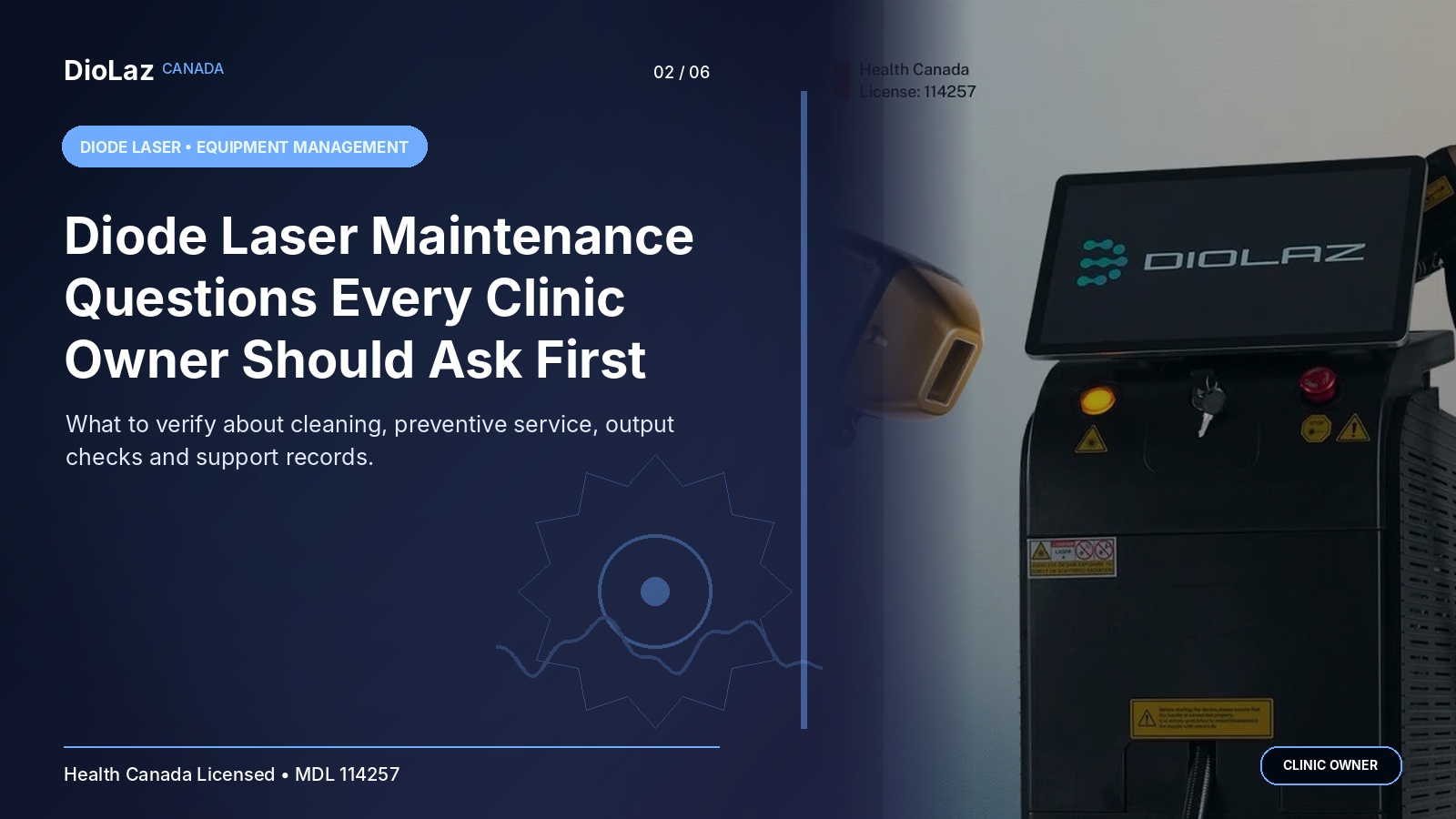
Les propriétaires de cliniques comparent souvent la longueur d'onde, la puissance et la taille du spot avant de poser une question plus opérationnelle : qu'est-ce qui maintient le système disponible entre les rendez-vous ? Un laser à diode fortement sollicité fait partie de la capacité de production quotidienne de la clinique. Le nettoyage, l'inspection, les dossiers d'entretien et une voie d'escalade claire doivent donc faire partie de la décision d'achat, et non d'un dossier ouvert après la première panne.
Distinguer l’entretien par l’opérateur du service autorisé
Le manuel d'utilisation du laser à diode DioLaz établit une limite utile. Le personnel de la clinique est responsable des soins de routine, tels que le nettoyage des surfaces externes et le nettoyage de la pièce à main entre les traitements. Les réparations internes, les réglages et les autres procédures non décrites pour les opérateurs sont réservés aux techniciens autorisés par DioLaz Canada Inc. Cette distinction protège le personnel des dangers électriques et laser et aide à éviter que des réparations improvisées ne créent un deuxième problème.
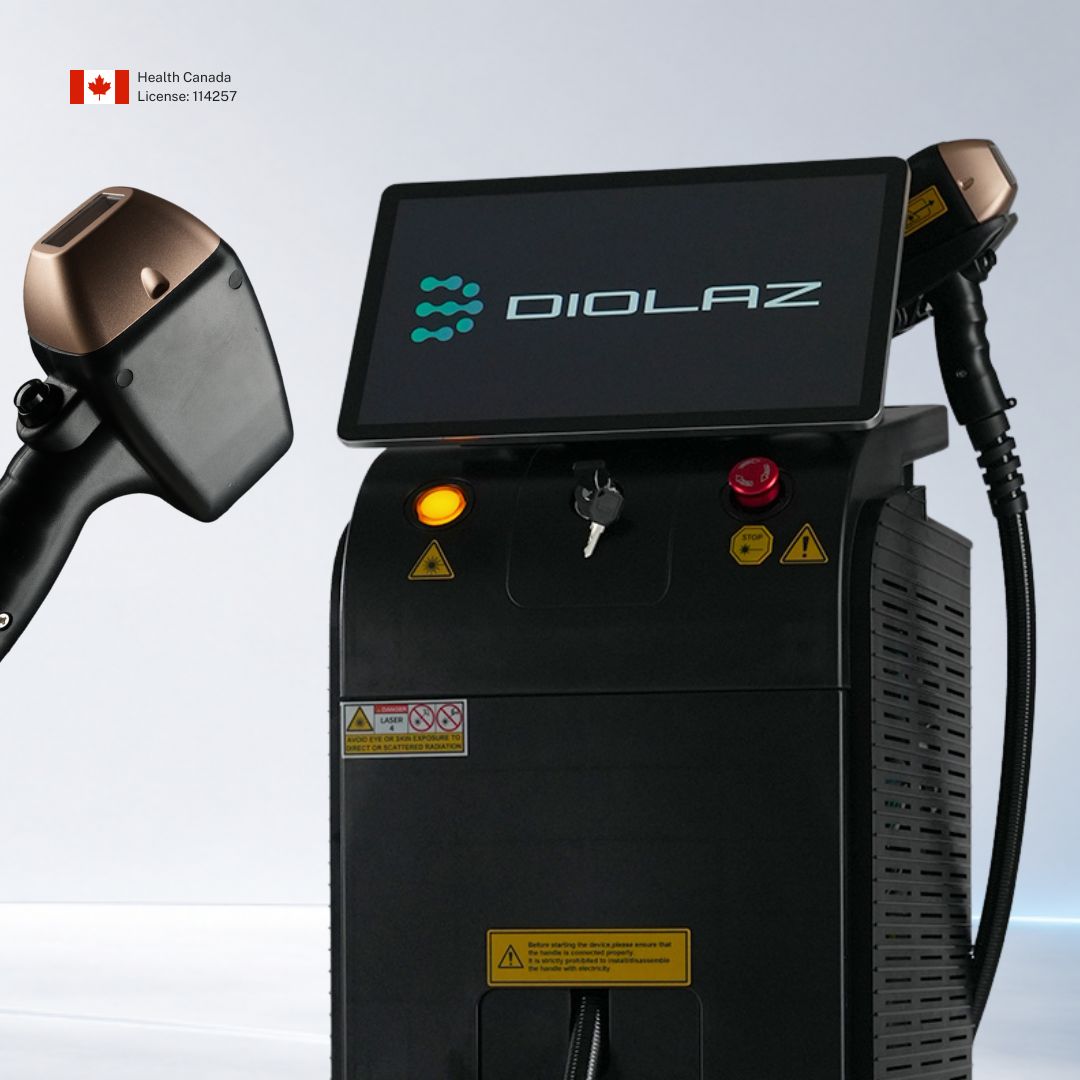
Avant l'achat, demandez au fournisseur de démontrer la séquence d'arrêt et de nettoyage, d'identifier les surfaces que le personnel peut entretenir et d'expliquer quelles alertes nécessitent un appel de service. Le manuel conseille également d'avoir le modèle et le numéro de série à portée de main lorsque vous contactez le support. Intégrez ces détails dans le dossier d'équipement de la clinique dès le premier jour.
Renseignez-vous sur la documentation du service préventif
Le manuel recommande des inspections régulières et identifie un intervalle de service de six mois pour des activités telles qu'une inspection générale du système, un nettoyage interne et la vérification de la puissance de sortie du faisceau laser. Une clinique doit savoir qui effectue ce travail, quelle documentation est fournie et comment la prochaine date d'échéance est suivie.
Il ne s'agit pas seulement d'une question administrative. Khalaf et ses collègues ont modélisé des stratégies de maintenance pour les équipements médicaux et ont constaté que la maintenance préventive avait un effet positif sur la durée de vie des équipements. Dans un projet d'ingénierie de la santé distinct, Al-Bashir et ses collègues ont réduit les temps d'arrêt de maintenance de 35 % après avoir introduit un processus plus structuré. Ces études portaient sur d'autres équipements médicaux, et non sur le système DioLaz, mais la leçon de gestion est pertinente : une maintenance planifiée et des dossiers complets facilitent le contrôle de la disponibilité des équipements.
Traiter les petits avertissements comme des données opérationnelles
Le système DioLaz surveille des fonctions telles que le débit et la température de l'eau, et il peut empêcher l'émission laser lorsque les conditions minimales de fonctionnement ne sont pas remplies. Les propriétaires doivent décider à l'avance qui enregistre les alarmes récurrentes, qui peut effectuer les vérifications de base et quand les rendez-vous sont suspendus. Des réinitialisations répétées sans documentation peuvent masquer un schéma qui aurait été plus facile à résoudre tôt.
Créez un journal d'une page avec la date, l'opérateur, l'alerte ou l'observation, l'action corrective, le contact de service, le temps d'arrêt et l'approbation de reprise d'utilisation. Couplez-le avec l'inspection quotidienne de la pièce à main et une vérification hebdomadaire du nettoyage extérieur. L'objectif n'est pas la paperasserie en soi, mais un historique fiable qui raccourcit les conversations de dépannage.
Utiliser une liste de contrôle d'approvisionnement
Posez cinq questions avant de signer : Quels soins de routine sont attribués au personnel de la clinique ? Quel intervalle de service préventif est spécifié ? La vérification de la sortie est-elle documentée ? Quelles pièces et quels techniciens sont disponibles au Canada ? Quelles informations sont requises lorsque le support est contacté ? Examinez ensuite les conditions de garantie séparément ; les directives de maintenance et la couverture de la garantie sont liées, mais ce ne sont pas les mêmes documents.
Parmi la gamme de lasers professionnels de DioLaz, les systèmes Diode, CO2 fractionné et Picoseconde sont tous homologués par Santé Canada : Diode MDL 114257, CO2 fractionné MDL 114258 et Picoseconde MDL 115451.
|
POUR LES PROPRIÉTAIRES DE CLINIQUES Achetez le processus de service avec le matériel. Une division claire des responsabilités, un calendrier préventif et un journal de maintenance utilisable peuvent protéger la capacité de rendez-vous longtemps après l'installation. |
Prochaine étape pour les propriétaires de cliniques : examinez les spécifications du laser à diode DioLaz et demandez à l'équipe de vente de vous présenter le nettoyage, l'entretien préventif, la documentation de support et l'homologation par Santé Canada.
Références
2. DioLaz Canada Inc. (s.d.). Systèmes de thérapie laser à diode : Instructions d'utilisation et techniques (Manuel d'utilisation).
Partager:
Ce que les propriétaires de cliniques canadiennes devraient vérifier avant d'acheter des lasers Pico
Modes laser SHR et HR à diode : lequel choisir pour une gestion optimale du flux de travail en clinique esthétique ?