
Le dossier clinique et commercial
Pour de nombreux propriétaires de cliniques, l'épilation au laser semble familière, saturée et facile à banaliser. En pratique, c'est précisément pourquoi elle peut devenir l'un des moteurs de revenus les plus stables d'une entreprise esthétique. La raison n'est pas la nouveauté. C'est la répétabilité. Les poils poussent par cycles, plusieurs séances sont nécessaires, les résultats s'améliorent lorsque les protocoles sont suivis dans le temps, et les patients passent souvent d'une zone de traitement à plusieurs une fois la confiance établie. Ces caractéristiques transforment l'épilation au laser en une gamme de services exceptionnellement compatible avec les achats par forfaits, la planification des rendez-vous à l'avance et l'utilisation prévisible des fauteuils.
La science confirme que la réduction à long terme dépend de la photothermolyse sélective et de traitements répétés pendant les phases de croissance, plutôt que d'une intervention ponctuelle. Cela est important sur le plan commercial car les propriétaires ne vendent pas un seul rendez-vous; ils vendent une séquence cliniquement justifiée. Les analyses de l'épilation au laser et à la lumière montrent constamment que la conception du traitement, la sélection de l'appareil et la technique de l'opérateur influencent la réduction à long terme, le risque d'effets secondaires et la satisfaction du patient. Une clinique qui explique bien la biologie convertit généralement mieux qu'une clinique qui ne fait que promouvoir des réductions.
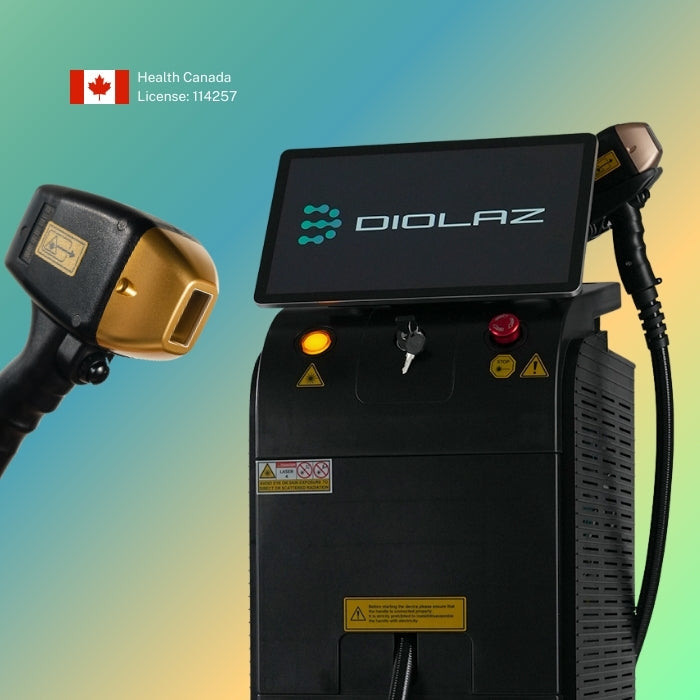
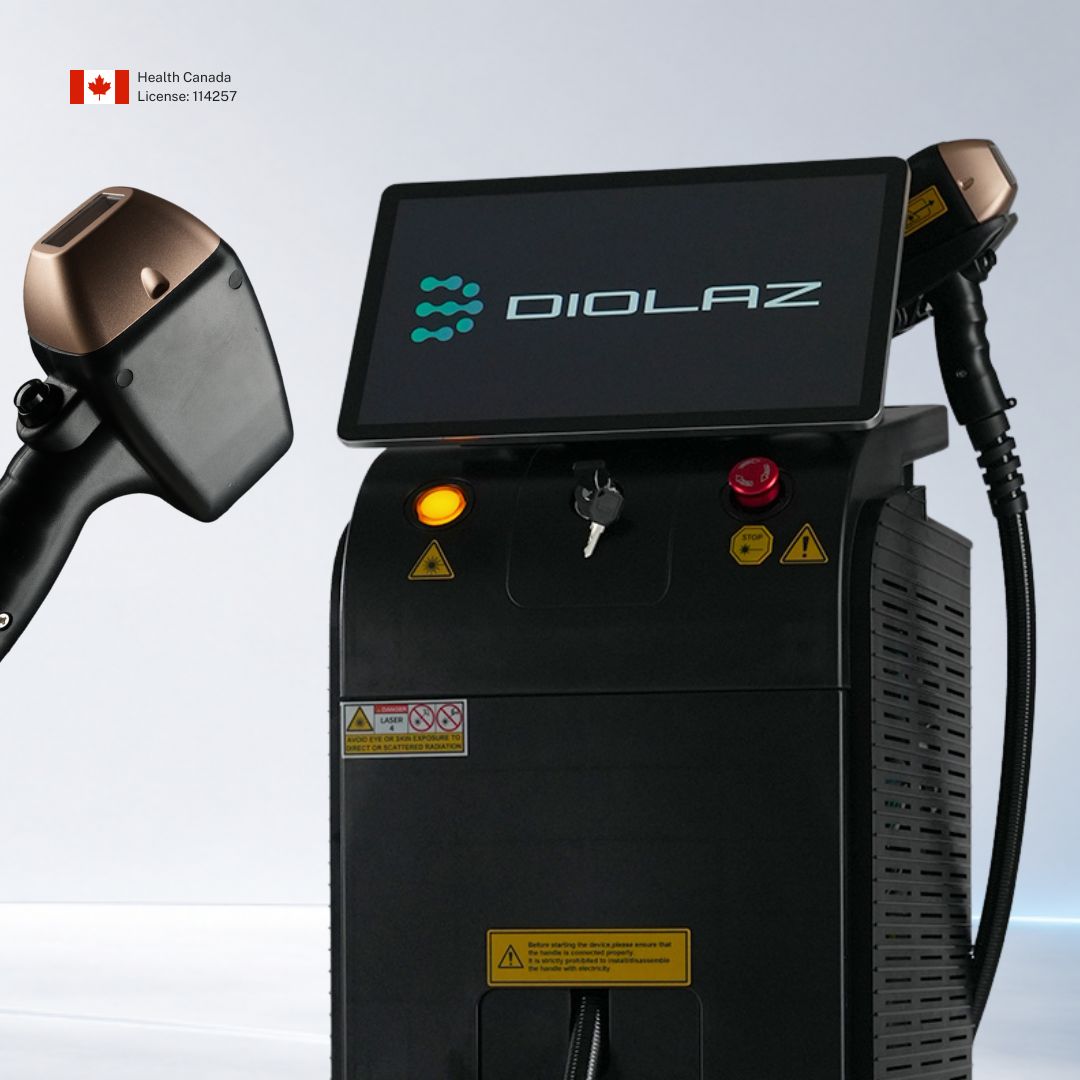
Où s'intègre la plateforme diode DioLaz
C'est là que la plateforme diode DioLaz offre aux propriétaires un modèle d'exploitation viable. La page produit présente un système à triple longueur d'onde combinant 755 nm, 808 nm et 1064 nm, avec jusqu'à 100 J/cm², jusqu'à 10 Hz, une taille de spot de 12×24 mm, un refroidissement par contact saphir à environ -32°C, et les modes SHR et HR. En termes commerciaux, cela signifie que le même système peut prendre en charge des flux de travail plus rapides sur de grandes surfaces, une logique de traitement plus adaptée aux différents types de peau et une meilleure argumentation en matière de confort pendant la consultation. Ce ne sont pas des détails cosmétiques. Ils affectent directement l'acceptation du traitement, la rotation des salles et la qualité des avis.
Mise en œuvre pour les propriétaires de cliniques
Les propriétaires qui génèrent bien des revenus récurrents font généralement trois choses. Premièrement, ils proposent des forfaits basés sur la logique biologique, et non sur des prix de dernier recours. Deuxièmement, ils fixent toujours le prochain rendez-vous avant le paiement. Troisièmement, ils insistent sur le fait que les progrès sont cumulatifs, et non instantanés. Cela réduit la pression sur les remboursements et protège la valeur perçue d'un appareil professionnel, homologué par Santé Canada, face à des concurrents moins chers utilisant un positionnement plus faible.
Il y a aussi un avantage en termes de marque. Une gamme de services d'épilation devient plus résiliente lorsqu'elle est présentée comme un programme clinique plutôt que comme un traitement de commodité. La clinique vend alors la sécurité, l'inclusivité, le confort et un suivi rigoureux. Ce discours est plus solide lorsque l'appareil prend en charge plusieurs longueurs d'onde et un refroidissement plutôt que de s'appuyer sur une seule promesse simpliste.
Homologation Santé Canada et conformité DioLaz
Tous les produits DioLaz sont homologués par Santé Canada. Les systèmes de thérapie laser à diode DioLaz sont homologués par Santé Canada en vertu du numéro de licence d'établissement de matériel médical (LEMM) 114257. DioLaz Canada Inc. détient également le numéro de licence d'établissement de matériel médical (LEMM) 32023.
Références
· Anderson RR, Parrish JA. Science. 1983;220:524-527.
· Gold MH. Clinics in Dermatology. 2007;25:443-451.
· Klein A, et al. Br J Dermatol. 2013;168:1287-1293.
Partager:
Café-causerie sur le laser fractionné au CO2 : Aperçu du marché des spas médicaux dans le Grand Toronto
Pourquoi le Vrai Picoseconde surpasse le Laser Q-Switched économique dans les cliniques esthétiques aujourd'hui