
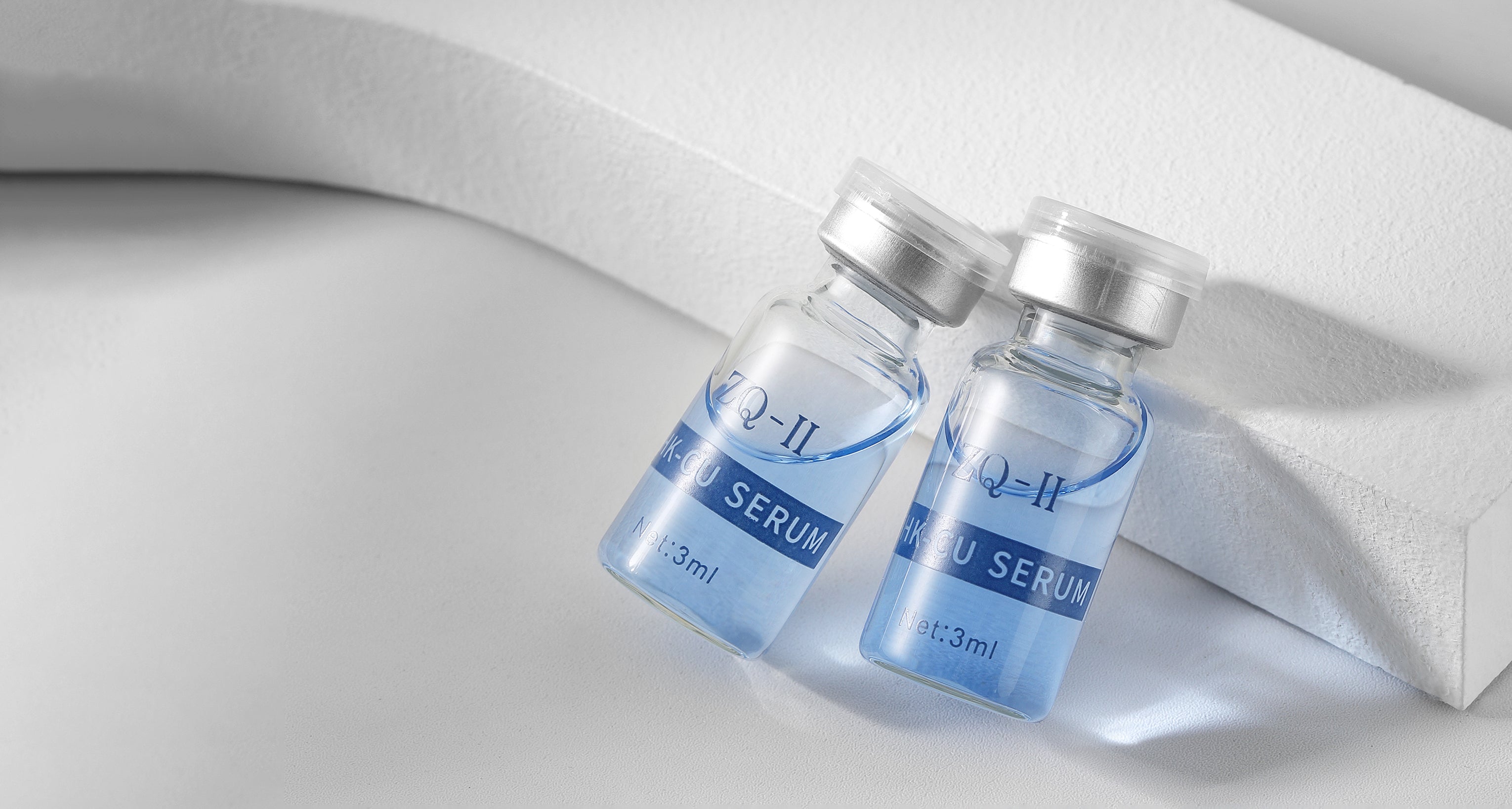
Introduction:
Dans l'univers en constante évolution des soins de la peau, un ingrédient fait sensation grâce à ses bienfaits remarquables : le GHK-Cu . Ce peptide lié au cuivre, également connu sous le nom de GHK ou tripeptide de cuivre-1, attire l'attention des dermatologues et des passionnés de beauté. Mais qu'est-ce que le GHK-Cu exactement, et pourquoi est-il considéré comme un ingrédient révolutionnaire pour la santé de la peau ? Découvrons ensemble les mécanismes scientifiques de ce puissant peptide, expliqués de manière accessible à tous.
Qu'est-ce que le GHK-Cu ?
Le GHK-Cu, ou glycyl-L-histidyl-L-lysine cuivre , est un tripeptide naturel qui se lie au cuivre. Découvert dans les années 1970 par le Dr Loren Pickart, le GHK a été isolé du plasma humain après qu'on a observé qu'il aidait les cellules hépatiques âgées à se comporter comme des cellules plus jeunes. Dans notre organisme, les taux de GHK sont les plus élevés chez les jeunes, mais diminuent considérablement avec l'âge ; par exemple, la concentration plasmatique de GHK autour de 20 ans (environ 200 ng/mL) diminue de plus de moitié à 60 ans. Cette diminution est corrélée au ralentissement de la cicatrisation et à la réduction de la régénération cutanée observés chez les personnes âgées. Le GHK associé au cuivre (formant le GHK-Cu) est la forme biologiquement active dans la peau. Cette minuscule molécule est suffisamment petite pour pénétrer la peau et les membranes cellulaires, où elle peut activer divers processus de régénération.
Comment le GHK-Cu agit-il sur la peau ?
Le GHK-Cu est souvent qualifié de peptide signal , car il transmet des messages importants aux cellules cutanées. L'un de ses rôles clés est d'acheminer le cuivre, un oligo-élément essentiel, jusqu'aux tissus cutanés. Le cuivre est vital pour les enzymes qui construisent et réparent les protéines structurelles de la peau. Le GHK-Cu « libère » la capacité des cellules cutanées à utiliser efficacement le cuivre, déclenchant des processus de réparation des dommages et favorisant une structure cutanée saine. La recherche scientifique montre que le GHK-Cu peut influencer l'activité d'un nombre étonnamment important de gènes liés à la croissance et à la cicatrisation. En effet, des études de profilage génétique suggèrent que ce peptide peut réguler à la hausse ou à la baisse plus de 4 000 gènes humains, « réinitialisant » ainsi les cellules à un état plus sain et plus jeune. En modulant les signaux génétiques, le GHK-Cu encourage la peau à produire du collagène et de l'élastine (qui lui confèrent fermeté et élasticité) tout en inhibant les gènes impliqués dans l'inflammation ou la dégradation des tissus.
Bienfaits prouvés du GHK-Cu pour les soins de la peau
Le GHK-Cu n'est pas qu'une simple molécule théorique de laboratoire : des décennies de recherche ont démontré ses bienfaits concrets pour la peau. Voici quelques-unes des améliorations cutanées liées au GHK-Cu, telles que rapportées dans des études scientifiques :
- Stimule le collagène et l'élastine : le GHK-Cu augmente significativement la production de collagène (la protéine qui assure la fermeté de la peau) et d'élastine, ainsi que d'autres composants essentiels à une peau saine, comme les glycosaminoglycanes. En activant les fibroblastes cutanés, il contribue à la reconstruction de la structure qui confère à la peau sa force et sa souplesse.
- Améliore la fermeté et la densité de la peau : En cosmétique, le GHK-Cu raffermit la peau relâchée , améliore sa densité et sa fermeté, et peut même atténuer l’amincissement cutané lié au vieillissement. Les utilisateurs constatent souvent une peau plus souple et liftée après une utilisation régulière du sérum GHK-Cu.
- Réduit les rides et les dommages causés par le soleil : ce peptide est un puissant allié anti-âge. Des études cliniques ont démontré son efficacité pour atténuer les ridules et les rides , lisser le grain de peau et estomper l’hyperpigmentation et les taches solaires. Lors d’un essai clinique, l’utilisation d’une crème à base de GHK-Cu pendant 12 semaines a permis de constater une réduction des rides et une amélioration du grain de peau par rapport à un placebo.
- Accélère la cicatrisation : Reconnu initialement pour ses propriétés cicatrisantes, le GHK-Cu accélère la réparation des lésions cutanées. Il stimule les processus à tous les stades de la cicatrisation – de la croissance de nouveaux vaisseaux sanguins au remodelage du tissu cicatriciel – pour une guérison plus rapide et plus efficace des coupures, écorchures et même plaies chirurgicales.
- Effets anti-inflammatoires et antioxydants : Le GHK-Cu apaise également l’inflammation cutanée. Des études indiquent qu’il peut inhiber le NF-κB , une molécule qui favorise l’inflammation et la dégradation des tissus, réduisant ainsi les rougeurs et les irritations. Ses propriétés antioxydantes contribuent à neutraliser les radicaux libres, protégeant la peau des agressions extérieures.
Tous ces bienfaits expliquent pourquoi le GHK-Cu est un ingrédient si recherché. Contrairement à de nombreuses tendances en matière de soins de la peau, les peptides de cuivre bénéficient d'une solide base de recherches scientifiques validées par des pairs. Pour les consommateurs, cela signifie que le GHK-Cu n'est pas qu'un effet de mode : c'est un véritable outil efficace pour le rajeunissement de la peau.
Un peptide naturel et sûr
Une autre raison de la popularité croissante du GHK-Cu réside dans son excellent profil de sécurité. Les peptides de cuivre sont bien tolérés en application cutanée, et des décennies d'utilisation et de recherches n'ont révélé aucun effet indésirable significatif. Naturellement présent dans notre organisme, le GHK-Cu n'est nécessaire qu'à des concentrations infimes (nanomolaires) pour agir, ce qui le rend à la fois doux et puissant. Les dermatologues apprécient le fait que le GHK-Cu soit non irritant pour la plupart des personnes – contrairement à certains ingrédients anti-âge plus agressifs – et qu'il puisse être utilisé à long terme pour préserver la santé de la peau. Il a même été utilisé sans danger pour la cicatrisation des plaies sur des peaux fragilisées, ce qui souligne sa grande douceur.
Le GHK-Cu dans les soins de la peau d'aujourd'hui (et au Canada)
Le GHK-Cu, issu d'une découverte en laboratoire, est devenu un ingrédient phare des sérums et crèmes de soin modernes. Partout dans le monde, les consommateurs avertis intègrent des sérums à base de peptides de cuivre à leur routine beauté pour une peau ferme, lisse et éclatante. Au Canada, des détaillants de soins de la peau de pointe comme DioLaz proposent désormais le sérum GHK-Cu au grand public. Plus besoin de chercher bien loin pour essayer cet ingrédient à l'efficacité prouvée scientifiquement. DioLaz, un détaillant canadien, offre un sérum GHK-Cu de haute qualité, permettant aux Canadiens de constater par eux-mêmes les bienfaits de ce peptide novateur. En intégrant un sérum GHK-Cu à votre routine, vous offrez à votre peau une dose de rajeunissement, appuyée par des recherches internationales.
Références :
Pickart L. & Margolina A. (2018). Actions régénératrices et protectrices du peptide GHK-Cu à la lumière des nouvelles données génétiques . Int J Mol Sci, 19 (7):1987.
Pickart L. et al. (2015). Le peptide GHK comme modulateur naturel de multiples voies cellulaires dans la régénération cutanée. Biomed Res Int , 2015 , Article ID 648108.
Mortazavi SM et al. (2024). GHK appliqué localement comme peptide anti-rides : avantages, problèmes et perspectives. BioImpacts, 15 :30071.

Partager:
Le guidage par électromyographie de surface du plancher pelvien améliore la rééducation post-partum quel que soit le mode d'accouchement.
Bienfaits anti-âge du GHK-Cu – Comment les peptides de cuivre rajeunissent la peau