
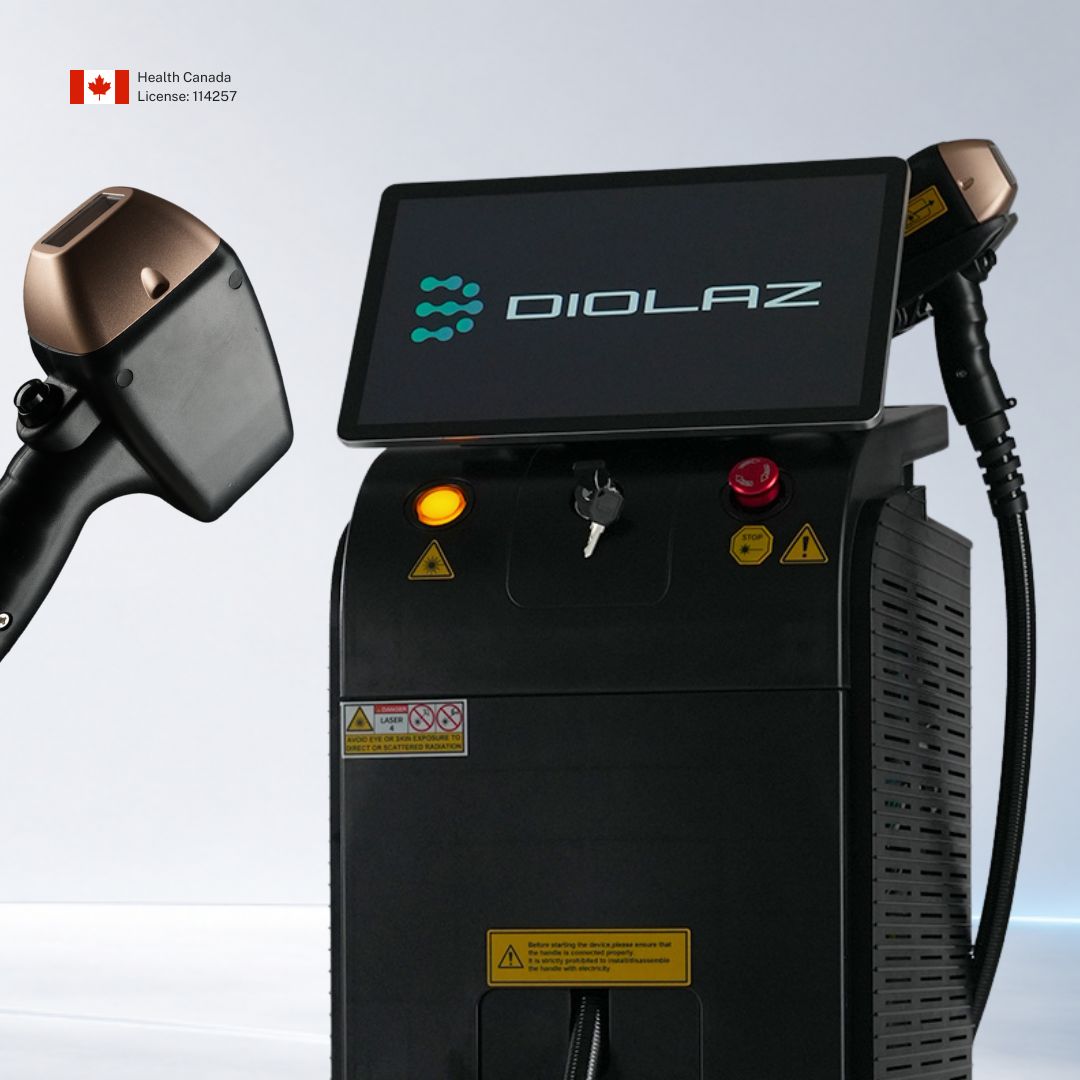
Start With Workflow, Not a “Better Mode”
SHR and HR are often presented as competing technologies. For a clinic owner, that framing is too simple. They are different delivery workflows, and the more useful question is where each one fits inside a treatment menu, operator training plan and appointment schedule.
The DioLaz Diode Laser's SHR as an in-motion technique for broader areas and HR as a concentrated, trigger-by-trigger workflow for smaller or contoured zones. The system combines a 12 × 24 mm spot, repetition rates up to 10 Hz, adjustable pulse duration and sapphire contact cooling. Those specifications create flexibility, but technique still determines whether coverage is orderly and endpoints are monitored consistently.
What SHR Changes in the Treatment Room
SHR keeps the handpiece moving while repeated passes distribute energy across the selected area. Operationally, this can suit legs, backs and other large surfaces where a smooth coverage pattern is easier to teach and observe. It also demands discipline: movement speed, direction changes, pass count and contact must follow training rather than intuition.
Comparative research helps explain the interest in this approach. Li and colleagues treated opposite axillae of 92 women with low-fluence, high-repetition SHR and high-fluence, low-repetition HR using an 808 nm Diode platform. At six months, median hair reduction was 90.2 percent with SHR and 87 percent with HR, while median pain scores were lower with SHR. Braun’s randomized split-leg study likewise reported comparable long-term reduction with an in-motion, high-repetition method and less discomfort.
These studies were conducted on other diode systems and do not establish DioLaz-specific outcomes. They do show that delivery pattern, fluence strategy and repetition rate should be evaluated together—not reduced to a single marketing label.
Where HR Fits
HR delivers a pulse at each trigger action. That makes it practical for detailed finishing, narrow contours and areas where the operator needs deliberate placement. The DioLaz product page notes that SHR and HR can be used within the same session, moving from broad coverage to precise work without changing platforms.
For owners, the training implication is important. Staff must learn two coverage grammars: continuous movement for SHR and controlled placement for HR. A person who is comfortable with one should not be assumed competent in the other. During a demonstration, ask the operator to show how the system moves between Standby and Ready, how settings are confirmed, how overlap is controlled and how the handpiece remains fully coupled to the skin.
Evaluate the Whole Workflow
A useful buying demo should include one broad test area and one contoured test area on approved test media. Observe whether the display is readable, whether the handpiece is balanced, whether cooling remains consistent, and whether the interface makes accidental parameter changes difficult. Also ask how the traditional handpiece and the built-in touchscreen handpiece differ in day-to-day use; they are separate configurations, not two handpieces supplied together.
Across DioLaz’s professional laser portfolio, the Diode, Fractional CO₂ and Picosecond systems are each Health Canada licensed: Diode MDL 114257, Fractional CO₂ MDL 114258, and Picosecond MDL 115451.
|
CLINIC-OWNER TAKEAWAY Do not buy SHR or HR as a slogan. Buy a platform your team can operate consistently across both broad coverage and detail work, with documented training and a clear reason for choosing each mode. |
Next step for clinic owners: explore the DioLaz Diode Laser, compare handpiece configurations, and request a workflow demonstration covering both SHR and HR.
References
2. DioLaz Canada Inc. (n.d.). Diode Laser Therapy Systems: Use and technical instructions (User manual).
Share:
Diode Laser Maintenance Questions Every Clinic Owner Should Ask First
Why CO2 Laser Reprocessing Matters Before Your Clinic Buys a System