
Licensing Comes Before Marketing
In Canada, purchasing a Pico laser is not merely a hardware decision. It is a regulatory, patient-safety, and business-governance decision. The most reliable clinic owners and medical directors review a laser the way they would any serious medical capital purchase: documentation first, sales language second. That order protects compliance, patient trust, and the consistency of day-to-day operations.
Verify the Device-Specific Canadian Licence
For the DioLaz Pico system, the first checkpoint is clear and verifiable. Health Canada identifies the PICOSECOND LASER SYSTEM as a Class III medical device under Medical Device Licence No. 115451. All DioLaz devices are Health Canada licensed. A concrete licence number is more valuable than vague words such as “approved” because it can be retained in procurement files, standard operating procedures, insurance records, and internal compliance documentation.
Specifications Must Support a Clinical Workflow
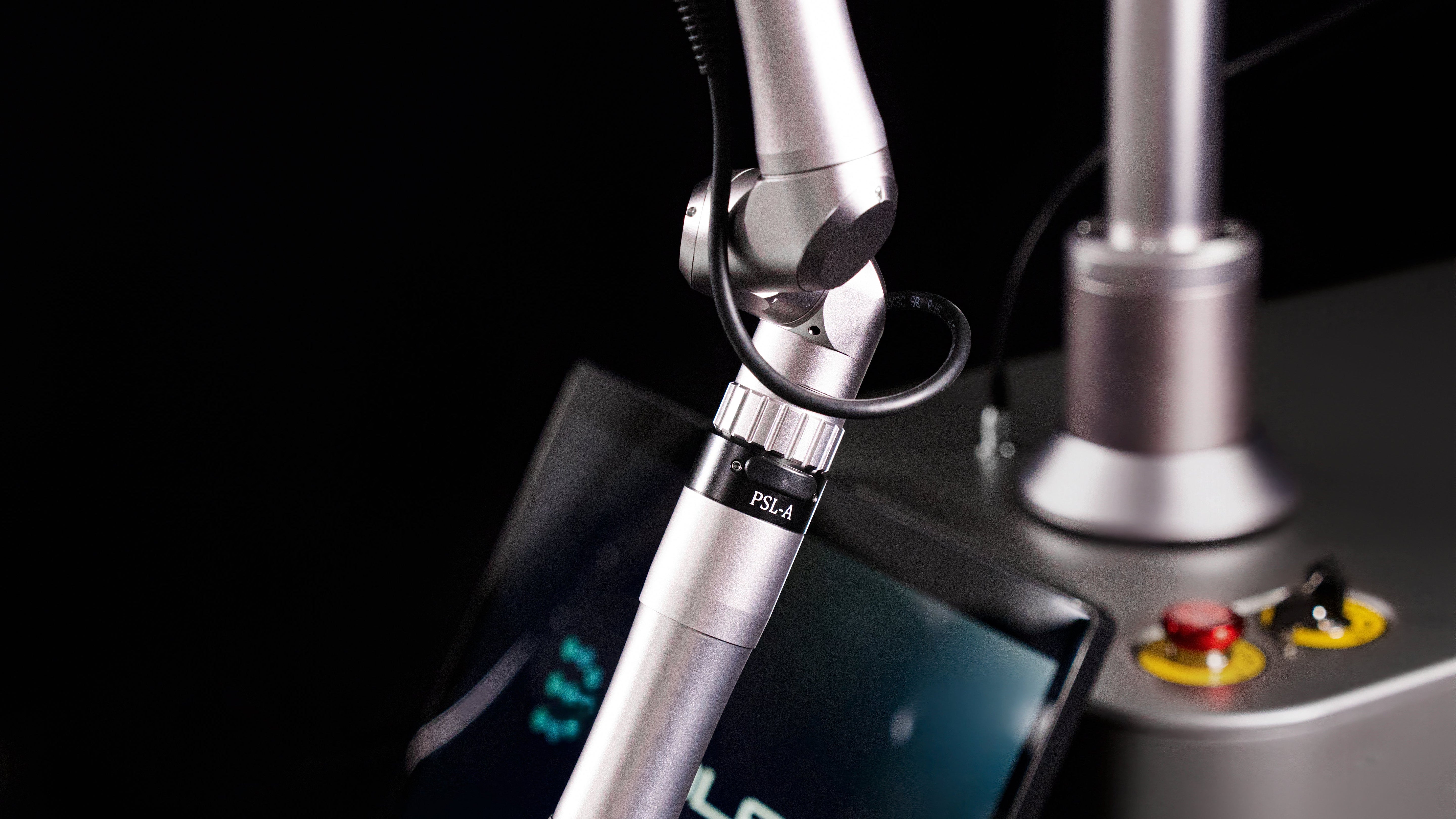
The official DioLaz Pico materials document 1064 nm and 532 nm wavelengths, a 450 ps pulse duration, 1–10 Hz repetition, a 2–10 mm adjustable spot size, articulated-arm delivery, air-and-water cooling, and two treatment heads. Specifications alone, however, are not a complete safety program. Buyers should also expect usable guidance on contraindications, clinical endpoints, room setup, protective eyewear, aftercare, maintenance, troubleshooting, treatment photography, and parameter documentation. Those materials help a clinic translate technical capability into repeatable SOPs and staff training. A clinic should never have to build its entire patient-safety workflow from a sales brochure.
Safety Design Should Be Auditable
Owners should ask how the system manages standby and ready states, emergency stopping, remote interlock control, foot-pedal protection, cooling alerts, and access to trained technical support. The supplied manual describes a door interlock intended to stop laser output when the treatment-room door is opened, as well as water-temperature and water-flow monitoring. These details are easy to overlook during a demonstration and impossible to overlook after a preventable incident. The better procurement question is not simply, “Can the machine fire?” It is, “Can my team use it safely, consistently, and defensibly every day?” The supplied DioLaz documentation turns those questions into a practical checklist for the clinic.
A Low Quote Can Transfer Risk to the Clinic
This is where the true picosecond versus budget nanosecond Q-switched comparison becomes practical. A conventional Q-switched laser may have a legitimate clinical role, but if the supplier cannot produce clear Canadian licensing, pulse-duration documentation, device-level safety information, treatment guidance, and training support, the risk does not disappear. It moves onto the clinic, its medical director, its SOPs, and its liability profile. Delayed service, incomplete onboarding, or unclear contraindication guidance can also reduce utilization after purchase. The cheapest quote can become the most expensive machine in the room.
Questions to Ask Before You Sign
Ask for the Health Canada licence number and covered model identifiers. Ask for the complete user manual. Ask how the pulse duration is documented. Ask which interlocks and alerts are built into the system. Ask what contraindication screening, endpoint training, installation, and service support are included. Finally, ask whether the supplier can explain—in plain English—why the platform is a true picosecond system rather than a nanosecond pigment laser carrying a Pico label. Strong answers support safer workflows and more credible marketing from day one.
CLINIC-OWNER TAKEAWAY
A device is only as defensible as the documentation, training, and workflow surrounding it.
Next step for clinic owners: Explore the DioLaz Picosecond Laser and verify Health Canada Medical Device Licence No. 115451.
References
1. Health Canada. (2026). Medical Device Licence No. 115451: PICOSECOND LASER SYSTEM.
3. DioLaz Canada. (2026). Picosecond Laser System User Manual. Internal product documentation.
4. Kirby, W., Desai, A., Desai, T., Kartono, F., & Geeta, P. (2009). The Kirby-Desai Scale: A proposed scale to assess tattoo-removal treatments. Journal of Clinical and Aesthetic Dermatology, 2(3), 32–37.
5. Barua, S. (2015). Laser-tissue interaction in tattoo removal by Q-switched lasers. Journal of Cutaneous and Aesthetic Surgery, 8(1), 5–8.
6. Sardana, K., Ranjan, R., & Ghunawat, S. (2015). Optimising laser tattoo removal. Journal of Cutaneous and Aesthetic Surgery, 8(1), 16–24.
Share:
Why True Picosecond Beats Budget Q-Switched in Aesthetic Clinics Today
Diode Laser Maintenance Questions Every Clinic Owner Should Ask First